Public Health
The Obesity Gold Rush: When Disease Becomes a Market Opportunity
How the Commercialization of Obesity is Reshaping Healthcare, Public Trust, and Patient Access
April 8, 2026
By Health Parliament
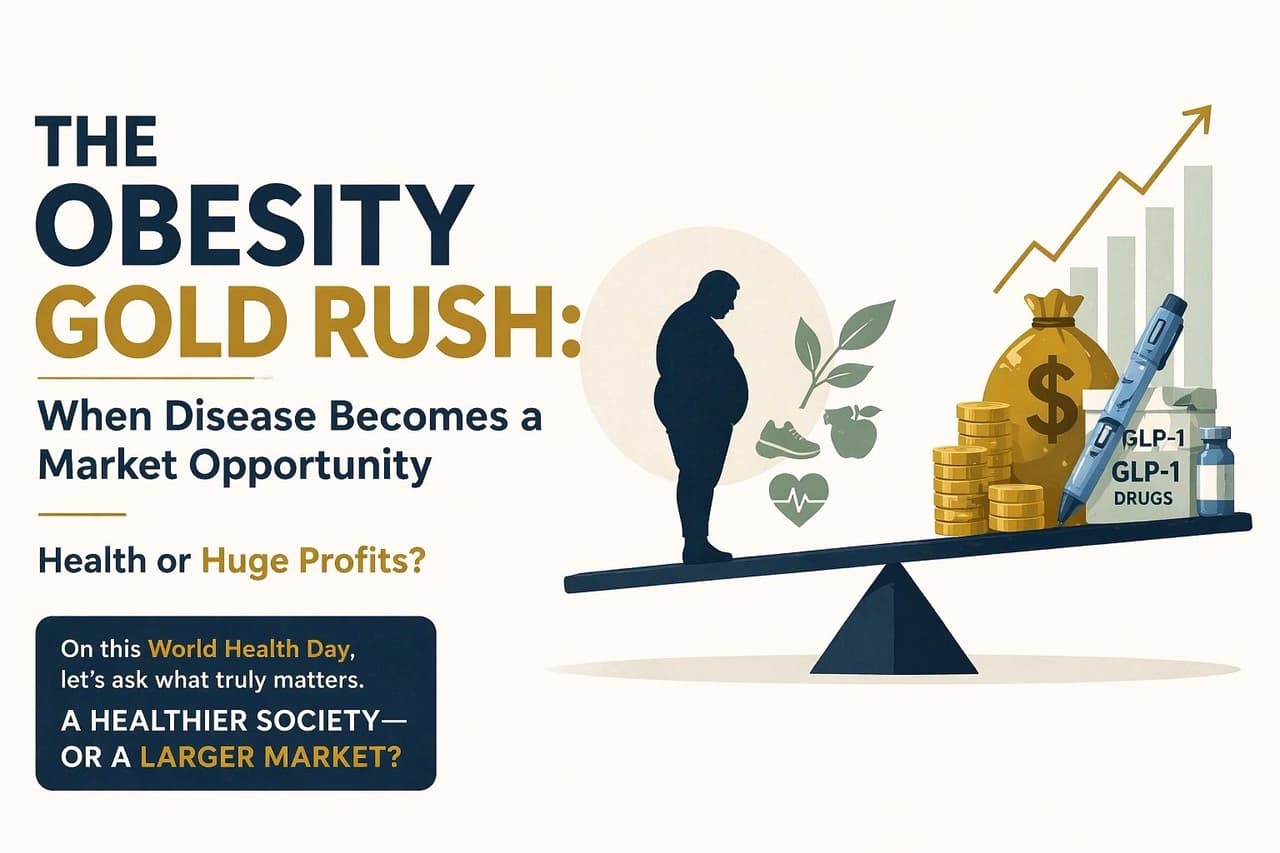
Obesity is undeniably one of the most pressing public health challenges, affecting millions globally. However, the evolving response from the pharmaceutical industry reveals a more complex and concerning narrative. Increasingly, obesity is being positioned as a chronic disease requiring lifelong pharmacological intervention, rather than being addressed as a multifactorial condition shaped by lifestyle, environment, and socio-economic determinants.
This shift is not driven by medical breakthroughs alone. It is also being promoted as a highly lucrative market opportunity, with projected financial success reaching hundreds of billions of dollars.
How GLP-1 Therapies Became a $100 Billion Market?
Pharmaceutical giants such as Eli Lilly and Novo Nordisk have identified obesity as a major growth frontier. Drugs like Ozempic, Wegovy, Mounjaro, and Zepbound are generating unprecedented revenues, with GLP-1 therapies alone contributing over $21 billion in 2023. This commercial success has accelerated efforts to position these drugs as first-line solutions in obesity management.
Ozempic’s journey from a diabetes medication to a global weight-loss phenomenon illustrates how market dynamics can influence clinical narratives. This transformation has been supported by a combination of sponsored research, medical education initiatives, influence on treatment guidelines, celebrity endorsements, and widespread social media amplification.
When commercial strategies begin raising serious concerns around the prioritization of patient needs, equitable access to healthcare services, regulatory balance, and public trust, healthcare institutions must take a clear position. Health Parliament, a leading public health policy think tank founded in 2019 by Dr. Rajendra Pratap Gupta, did exactly that. The organization proactively released a statement outlining its position on aggressive obesity-related campaigns. They argued that moments like this demand clarity, not neutrality.
“Our platform exists to advance patient rights, public health, ethical innovation, and responsible governance in healthcare. When commercial strategies raise serious concerns around prioritization of patient need, equitable access, regulatory balance, and public trust, we believe it is our responsibility to take a clear institutional stand. Healthcare leadership is not just about innovation and growth. It is about restraint, responsibility, and trust.”
Notably, the Government of India has since moved in a similar direction. On 11 March 2026, India's Central Drugs Standard Control Organization (CDSCO) issued an advisory prohibiting all direct and indirect promotional activities for GLP-1 drugs, including advertisements disguised as disease awareness campaigns. This came just days before Ozempic went off patent on 20 March 2026, with more than 30 generic versions expected to enter the Indian market.
This step by a healthcare regulatory organization reflects integrity and resilience in protecting public trust and prioritizing patient needs over market narratives.
The Hidden Costs: Access, Equity, and Over-Prescription
Beyond the broader commercialization of disease, this trend also carries significant costs beyond the medications themselves.
First, an over-reliance on pharmacological solutions risks diverting attention and investment away from community-based, preventive, and lifestyle-driven interventions—approaches that are more sustainable and equitable in the long term.
Second, the high cost and indefinite use of such medications raise serious concerns around accessibility. A large proportion of individuals affected by obesity belong to lower-income groups, making similar GLP-1 therapies financially out of reach and potentially widening health inequities.
Third, there is a growing risk of misuse, over-prescription, and unethical dispensing practices, especially in markets with uneven regulatory enforcement.
Obesity cannot and should not be reduced to a pharmaceutical opportunity alone.
What a Responsible Obesity Policy Should Look Like
Effective obesity management requires a comprehensive, multi-sectoral approach that integrates prevention, lifestyle modification, behavioral health, and, where appropriate medical intervention.
On this World Health Day, we must ask a fundamental question: Are we building a healthier society or a larger market? Health Parliament's position is clear, sustainable obesity management demands health policy that places patients above market narratives, regardless of how large the GLP-1 therapies market grows. The answer will define the future of healthcare.
Authors

Health Parliament
Health Parliament is the world's foremost and fastest-growing healthcare think-tank. We believe in ground-level transformation through Real Work, Great Leaders, and Right Policies. Our work reaches the policymakers and has helped shape impactful public health interventions. We convene Thought Leaders and Industry experts through exclusive CEO roundtables, masterclasses, regional leadership development forums, webinars, and conferences. Health Parliament Membership is now open for healthcare professionals from India and 66 other countries.
Connect on LinkedInShare this article
Contact Us
+91 9911100774
Sign Up for the Latest News
Social Connect
Visitors:
Loading...