National Mental Well-Being Survey – Students
In the wake of the devastating COVID-19 pandemic, Health Parliament recognized the profound impact on students, the future generation. Comparing the crisis to a global war, the author emphasizes the urgency of addressing this issue. A national-level online survey was conducted in October-November 2021 to assess the current situation and understand the specific challenges students face regarding their mental well-being due to the pandemic. The study, led by Dr. Himadri Bisht with support from Dr. Swati Ahluwalia, aims to provide actionable recommendations. The report expresses hope that these insights will lead to appropriate interventions from all stakeholders before problems become more severe.
National Covid Vaccine Acceptance Survey
In the face of the global COVID-19 pandemic, Health Parliament conducted a survey between December 2020 and January 2021 to understand public perception and acceptance of the newly developed vaccines, including India's COVAXIN and Covishield. The survey revealed a significant portion of the population (61.15%) hesitant to take the vaccine due to concerns about side effects.
This report goes beyond simply reporting the numbers. It aims to highlight the reasons behind vaccine hesitancy and suggest solutions to encourage people to get vaccinated. The author commends Dr. Himadri Bisht for leading the survey and expresses hope that the government will consider the findings. The report emphasizes the importance of collaboration between the government and the private sector to create an "outcome-driven healthcare" system, ultimately leading to victory over COVID-19.
Nursing – An Endangered Profession
Health Parliament goes beyond mere celebration during events like International Year of Nursing. We conducted a comprehensive study on the current state of nursing in India. This study aims to analyze the profession's situation and propose solutions to elevate its status.
The report emphasizes the crucial role of nurses as the "backbone of healthcare," yet often undervalued. The text argues that nurses are unfairly "stopped at the gate" despite being the "gatekeepers" of the healthcare system. Health Parliament advocates for mainstreaming the profession and granting nurses their "rightful place." They believe a patient-centric healthcare system cannot exist without a strong focus on nurses and pharmacists. The report hopes to spark debate and lead to actions that move beyond a doctor-centric approach.
The author expresses gratitude to the Disease Management Association of India (DMAI), the Health Parliament team (including Dr. Swati, Dr. Himadri Bisht, Krishna Chandra, and Mevish Vaishnav), and the nurses who participated in the study. The report concludes with a promise from Health Parliament to continue advocating for a healthcare system that recognizes the vital contributions of nurses.
Standard Body Piercing practices - Draft Guideline
Body piercing, a growing trend especially among young Indians, carries cultural significance but also potential health risks. The focus is on clear and practical guidelines for professionals, promoting self-regulation within the industry rather than relying on potentially ineffective government intervention. Educating both professionals and the public about safe practices is key. These "living guidelines" will be regularly updated, aiming for a thriving body piercing industry that prioritizes safety alongside job creation.
Pharmacists – Moving Beyond Rx
With a vast network reaching remote areas, pharmacies are often the first point of contact for minor ailments in India. Pharmacists, sometimes called "gatekeepers" of the healthcare system, fulfill a diverse role beyond simply dispensing medication. They educate patients, manage chronic illnesses, and provide preventive care. However, the healthcare landscape is evolving rapidly with artificial intelligence and online pharmacies emerging. To survive and thrive in this technology-driven future, pharmacists will need to diversify their skillset and take on new responsibilities. Recognizing this shift, Health Parliament conducted a nationwide survey with over 600 pharmacists across 25 states. This study, conducted from June to September 2021, aimed to understand the current state and future of pharmacy practice in India. The report focuses on the perspectives of pharmacists themselves, gathering their views and suggestions on how to empower the profession and maximize their potential within the evolving healthcare system. The findings from this survey are explored in the following section.
Digital Health – Standardizing Terminologies
This report, a submission to World Health Organization, explores the growing complexity of digital health terminology. With its widespread adoption, a key challenge lies in the use of multiple, often confusing terms. The report traces the evolution of digital health, from "Television Medicine" to "mHealth," highlighting the contribution of academics but also the resulting confusion for users. It argues for a standardized definition of digital health, digital consultations, and other key terms. This standardization is crucial to navigate the pre- and post-COVID eras of digital health effectively. By analyzing the past three decades and proposing potential definitions, the report aims to stimulate debate and pave the way for a more unified understanding of digital health terminology.
Womens' Health Guideline - Ready Reckoner
Health Parliament in guidelines released under HGDG focuses on women's health and emphasizes a holistic approach to women's health, moving beyond just reproductive care. It advocates for a "lifecycle approach" that considers a woman's health needs throughout her entire life. The guidelines aim to empower women by providing them with the knowledge they need to make informed healthcare decisions and prioritize their own well-being. Developed through extensive research and collaboration with experts, these guidelines address the common issue of women neglecting their own health.
Womens' Health Guideline - Detailed Document
Health Parliament in guidelines released under HGDG focuses on women's health and emphasizes a holistic approach to women's health, moving beyond just reproductive care. It advocates for a "lifecycle approach" that considers a woman's health needs throughout her entire life. The guidelines aim to empower women by providing them with the knowledge they need to make informed healthcare decisions and prioritize their own well-being. Developed through extensive research and collaboration with experts, these guidelines address the common issue of women neglecting their own health.
Responsible Internet Usage
Our daily reliance on the internet, from texting to video conferencing, leaves a hidden mark – a digital footprint. This footprint also translates to a carbon footprint, contributing to the worsening climate crisis. This report by the Dynamic Coalition on Internet & Jobs (DC-Jobs) serves as a wake-up call, that aims to raise awareness of responsible internet usage and its impact on the environment, economy, and society. The report hopes to spark discussion and further studies, ultimately reaching all Internet users through the Internet Governance Forum, a global platform for addressing Internet-related issues.
Scoping of Digital Health & Role of Multilateral Bodies
This report argues multi-lateral bodies like WHO need to step up their Digital Health initiatives. Past efforts lacked clear direction and local focus. Report proposes a shift from generic plans to actionable local strategies. Each country's needs should be assessed and addressed with customized roadmaps and support structures.
Collaboration is key to achieving "Digital Health for All" by 2028, especially in low- and middle-income countries.
Small Health Care Organizations: Opportunities and Challenges
This report by Health Parliament highlights the critical role of Small Healthcare Organizations (SHCOs) in the Indian healthcare system. Despite serving 80% of patients, SHCOs face challenges that threaten their sustainability.
Health Parliament conducted a national workshop to identify these issues and potential solutions. The report outlines plans to address these challenges over the next few months, aiming to transform SHCOs into "Preferred Service Providers."
The report emphasizes the importance of scaling up and improving quality to reach this goal. The ultimate vision is to create a network of "Smart Healthcare Organizations" across India, providing affordable, accessible, and accountable care to all.
Door to Door Survey on Speech & Hearing Disorders
Health Parliament collaborating with International Patients' Union, and the Delhi branch of ISHA (DISHA) explores the alarming rates of speech, hearing, and communication problems in a major survey conducted across Delhi NCR and Jammu & Kashmir. This study involves over 59,000 individuals.
The results highlight a much greater prevalence of these issues than previously anticipated. This calls for a more comprehensive strategy than the existing "1000 Days" framework. The report emphasizes the need for a "Holistic 1000 Days" approach, urging stakeholders to work together and develop effective solutions. This large-scale study serves as a critical wake-up call, highlighting the importance of addressing these conditions for a healthier India.
State of Digital Health 2022
The Dynamic Coalition on Digital Health examines the rise of Digital Health and the uneven adoption rates across the globe. This report acts as a stocktake, assessing awareness, challenges, and current use of digital healthcare solutions. The ultimate goal? "Digital Health for All by 2028." To achieve this ambitious target, the report proposes a collaborative approach and invite you to join DC-Digital Health network, participate in UN discussions on internet governance, connect with regional digital health organizations, or even host your own events with their help. By working together, we can revolutionize healthcare through the widespread adoption of Digital Health.
Urbanization, Biodiversity & Mental Health
Rapid urbanization, driven by economic factors, is creating a hidden crisis. This report by the Dynamic Coalition on Environment highlights the negative environmental impact, with green spaces replaced by concrete jungles. But it goes beyond that, exposing a previously overlooked cost: the negative impact on mental health. The report doesn't shy away from the urgency, acknowledging the environmental dangers and echoing President Obama's call to action. The hope lies in technology and collaboration. They urge readers to spread awareness, participate in discussions, and even join their new ACT Alliance. Can we become a "responsible generation" and address this "triple burden" of urbanization, biodiversity loss, and mental health?
Principles of Digital Health
Report advocates for a patient-centered approach to Digital Health. It emphasizes the importance of clear communication, ethical practices, and prioritizing patient well-being. The report outlines a set of 20 principles that healthcare providers should follow when delivering digital health services. By following these principles, healthcare providers can ensure that Digital Health benefits patients and contributes to a more effective healthcare system.
Report on First Responders- ASHA & AWW
This report dives into the critical role of ASHAs and AWWs, the women on the frontlines of rural healthcare. They are the "gatekeepers" and "first responders" for countless communities. This groundbreaking primary study explores their experiences. Through in-depth research, the report offers valuable policy recommendations aimed at bolstering the Indian healthcare system. Download the report to gain insights into these essential women and discover how we can strengthen rural healthcare.
The Promise and The Potential of Digital Therapeutics (DTx) for DCDM- A New Therapeutic Field
Chronic disease management is undergoing a revolution driven by technology. This report argues that traditional methods, with infrequent doctor visits, are insufficient and proposes Digital Therapeutics (DTx) as a solution. Imagine a "digital doctor" on your phone, using medical devices and algorithms to continuously support your chronic condition. This ongoing support can potentially lead to better management, fewer doctor visits, and lower costs. Report proposes a new term: Digital Chronic Disease Management (DCDM). Healthcare professionals are urged to embrace this new approach. Health Parliament offers resources to learn more, including upcoming courses and the Asia Pacific DTx Leadership Alliance. The message is clear: the future of chronic disease management is digital, and those who don't adapt risk falling behind.
National List of Essential Assistive Products (NLEAP) Health Parliament was a contributor to this ICMR’s Report
This report addresses the growing attention on assistive products (APs) and their critical role in enhancing quality of life for individuals with functional impairments, such as those with disabilities, chronic diseases, or aging-related limitations. Highlighting the National List of Essential Assistive Products (NLEAP), it emphasizes ensuring access to affordable, priority APs based on need, prioritizing inclusivity, and addressing market gaps. The report outlines five key priorities: prioritizing essential products, focusing on inclusivity, meeting demand for specific needs, boosting R&D, and improving affordability through lower prices. It calls for regular updates to APs to keep pace with technological advancements and societal needs, aiming for a more inclusive future.
National Health Policy 2017 – Five years (2017-2022) – Goals vs Delivery
The author, who played a role in drafting the policy, highlights the crucial role of implementation alongside creating policy documents. Recognizing this, Health Parliament, a healthcare advocacy organization, has taken the initiative to monitor the NHP's progress. They've conducted a five-year review using publicly available data, and plan to make this an annual exercise. These reports will be submitted to relevant authorities to assess the effectiveness of the policy's implementation.
Money, Money, Money from a Poor Man’s Purse. Why the pharmaceutical Industry needs to Re-Imagine | Re-Focus | Re-Invent
This report by Health Parliament sheds light on the concerning influence of the pharmaceutical industry. The report highlights the industry's immense power, exemplified by their influence on doctors' prescriptions. It contrasts this with the historical ethical stance of pharmaceutical giants like Merck, who emphasized serving patients before profits.
Indian Healthcare for Sale- published in Financial Express (Healthcare)
This report examines the growing presence of foreign investment in Indian healthcare. This influx of cash targets hospitals, pharmaceuticals, and medical devices, fueled by India's massive and aging population. While this investment appears promising, the author, Dr. Rajendra Pratap Gupta, expresses concern that profit may overshadow affordability. He warns of potential consequences like rising healthcare costs, prioritization of expensive procedures, and consolidation within the healthcare system, leaving smaller players with less bargaining power. Dr. Gupta urges the Indian government to reconsider its approach, advocating for inspiration from models like Sri Lanka's and the UK's NHS. He emphasizes the need for a healthcare system that prioritizes affordability and accessibility. Originally, it was published as an article in the Financial Express.
Re-Inventing Ayushman Bharat Digital Mission. Re-Orienting- Scope & Scale
Despite its remarkable progress under strong leadership, Bharat has room to grow as a global leader in Digital Health. This report by Health Parliament emphasizes the critical role digital initiatives play in healthcare access, improved outcomes, and building trust in the system. Report stress the need for a comprehensive strategy to maximize the use of ABHA IDs and ensure their effectiveness. Health Parliament advocates for a "Digital First" approach to healthcare delivery in Bharat, with an ambitious goal of achieving "Digital Health for All" by 2028, the 50th anniversary of the Alma Ata Declaration. We believe this success story can pave the way for solving global healthcare challenges, and offer their expertise to collaborate on developing and implementing this groundbreaking digital healthcare model.
kNOw Parkinson’s Disease
Health Parliament and International Patients' Union have joined forces to launch the "kNOw Series," a collection of informative booklets designed to empower you with knowledge about various medical conditions. This series emphasizes the importance of early diagnosis. Each booklet provides a basic understanding of a specific illness, allowing you to take proactive steps before the condition becomes chronic or untreatable. This particular report focuses on Parkinson’s Disease, a condition affecting millions of people worldwide. "kNOw Parkinson’s Disease" booklet equips you with the information you need to take charge of your health and well-being.
kNOw Alzheimer's Disease
Health Parliament and International Patients' Union have joined forces to launch the "kNOw Series" - a collection of informative booklets designed to empower you with knowledge about various medical conditions. This series recognizes the importance of early diagnosis. By providing a basic understanding of different illnesses, these booklets aim to equip you with the information you need to take proactive steps before conditions become chronic or untreatable. This specific report focuses on Alzheimer's disease, a form of dementia.
Asia Position Paper on Universal Health Coverage (UHC) By Global Call to Action Against Poverty (GCAP), People’s Vaccine Alliance, Asia (PVA, ASIA), & Health Parliament
Health Parliament in collaboration with Global Call To Action Against Poverty (GCAP) & People’s Vaccine Alliance, Asia (PVA, ASIA) explores the status of Universal Health Coverage (UHC) across Asia. It emphasizes prioritizing health spending alongside and suggests a phased implementation of UHC with a focus on digital health and value-based care. It highlights the importance of not just coverage but also UHC utilization, and advocates for a shift towards preventive and wellness measures. The report recommends creating a knowledge-sharing platform and a UHC Digital Dashboard for data-driven decision-making, while emphasizing investment in pre-emptive healthcare models.
Price Model – A Prescription for Scaling Up Digital Health by Governments
This concise report explores the challenges and successes of implementing Digital Health at scale, drawing from the author’s personal experience in shaping India’s groundbreaking approach. Highlighting the retreat of Big Tech giants like Google and Microsoft from Digital Health, the author argues that government stewardship is essential to unlock its potential. By embedding Digital Health in India’s National Health Policy 2017 via a political manifesto, the author catalyzed a transformative model that integrated it across healthcare. Reflecting on a decade of progress, the paper showcases India’s achievements as a global lesson, while inviting feedback for future advancements.
State of Digital Health 2023
This annual report from the United Nations’ Internet Governance Forum’s Dynamic Coalition on Digital Health examines the global evolution and impact of Digital Health, spotlighted by COVID-19 as a critical tool for care delivery. Highlighting decades of large-scale Digital Health initiatives—from the USA to Africa—it showcases their transformative influence on healthcare. Designed as a primer for debate, the report aims to drive the goal of Digital Health for All by 2028, marking 50 years since the Alma Ata Declaration.
Awareness Vs. Action- Fostering Environmental Responsibility in the Digital Age
This report, led by the head of the United Nations’ Internet Governance Forum’s Dynamic Coalition on Environment, explores the dual nature of the Internet as both an opportunity for growth and a contributor to carbon footprints in the digital age. The Coalition aims to educate globally on environmental issues vital to quality of life and economic health, asserting that "The Environment is the Economy, and the Economy is the Environment." By reframing environmental challenges as economic priorities, it promotes action through green technologies and the circular economy.
Key Takeaways from the Health Parliament Innovation Lab with Dr. Abhay Bang
This report encapsulates insights from the Health Parliament Innovation Lab featuring Dr. Abhay Bang, a trailblazer in rural healthcare. Drawing from his decades-long work with SEARCH in Gadchiroli, Maharashtra, the session highlighted practical, scalable solutions for healthcare challenges. Key takeaways include the power of community-driven health models, such as training village women to reduce infant mortality, and the necessity of government stewardship to amplify impact. Dr. Bang emphasized integrating local needs into policy, as evidenced by India’s adoption of HBNC, and stressed innovative, low-cost approaches like telemedicine and grassroots empowerment to bridge healthcare gaps. The lab underscored that sustainable change requires aligning economic incentives with environmental and health priorities, offering a blueprint for global healthcare transformation.
Healthcare Budget 2025- A Decisive Step Forward
India stands at a pivotal moment in its healthcare journey, with the Union Budget 2025-26 signaling a decisive step toward a healthier, more resilient nation. This report, prepared by Health Parliament, delves into the transformative strides and strategic investments shaping India’s healthcare landscape—from pioneering digital health initiatives like the Ayushman Bharat Digital Mission to ambitious expansions in medical education and infrastructure. As the country leverages technology and policy to address longstanding challenges, this budget reflects a bold commitment to accessibility, innovation, and equity. Yet, amidst the progress, critical gaps remain. This analysis explores the milestones achieved, the opportunities unlocked, and the road ahead to ensure healthcare becomes a cornerstone of India’s vision for a developed future.
Prioritising Women’s Health: Field Report for Action
This report from Health Parliament, a ‘For Purpose’ organization founded to drive mass societal impact in healthcare, presents findings from a primary field study on women’s health in India. Reinvesting profits from 2021, the study explores women’s dual roles as care-providers (ASHAs and AWWs) and care-seekers, revealing persistent challenges like widespread anemia despite decades of government programs. Highlighting the need for a multi-stakeholder approach to accelerate progress toward ‘Viksit Bharat,’ it previews a one-day workshop to ideate innovative solutions. Building on the world’s first comprehensive Women’s Health Guideline (launched 2022) and a women’s health app, Health Parliament calls for collaboration to transform women’s and children’s health across India.
Preparing Clinicians for the Digital Era - 2025 & Beyond
The healthcare industry is undergoing a significant transformation, driven by advancements in digital technology. This report explores the growing importance of Digital Health as a key strategy for professionals and organizations in the sector. It emphasizes that those who fail to adapt to this shift risk falling behind, while those who embrace Digital Health will remain in high demand, particularly in an era of increasing layoffs. The report highlights the vast opportunities within Digital Health and underscores the role of specialized courses in equipping stakeholders—hospitals, pharmaceutical companies, medtech firms, and healthcare professionals—with the necessary skills to navigate this evolving healthcare. It serves as a guide for individuals and organizations looking to thrive in the digital era and secure their future in healthcare.
Global Newsmaker of the Month - January 2025
The January edition of the Newsmaker of the Month initiative by Health Parliament examines the broader implications of U.S. President Donald J. Trump's decision to withdraw the U.S. from the World Health Organization (WHO), including WHO’s financial instability, the potential rise of China’s influence in global health, and the weakening of U.S. outbreak response capabilities. It also questions WHO’s governance and its dependence on major donors like the Bill & Melinda Gates Foundation. The piece concludes that while WHO is flawed, it remains essential and requires reforms for greater autonomy and more effective crisis response.
Implications of DPDP Rules 2025 on Healthcare
Health Parliament hosted an exclusive online workshop on the Digital Personal Data Protection (DPDP) Rules, 2025, bringing together industry experts to decode its impact on the healthcare sector. Featuring thought leaders Dr. Milind Antani and Ms. Varsha Rajesh from Nishith Desai Associates, the session explored critical compliance requirements, patient data rights, and the evolving legal landscape for healthcare providers. This report captures the key takeaways, offering actionable insights to help organizations navigate the future of digital health with confidence.
Key Takeaways from the Health Parliament Innovation Lab with Dr. Sunil Shroff
The report from Episode 7 of the Health Parliament Innovation Lab highlights the critical shortage of organ donations in India, where 500,000 people need transplants annually, but only 18,000 are performed. Kidney disease alone claims 200,000 lives each year, yet systemic barriers such as low awareness, poor hospital infrastructure, cultural misconceptions, and a lack of trained ICU staff hinder organ donation efforts. To address this crisis, Dr. Sunil Shroff emphasized the need for Non-Transplant Organ Retrieval Centres and introduced Organ Predict, an AI-driven tool that enhances transplant success rates. The report underscores the urgency of ethical, voluntary organ donation and calls for public participation, policy reforms, and leadership-driven initiatives to bridge the demand-supply gap.
Health Newsmaker of the Month - February 2025
The February 2025 edition of Health Newsmaker of the Month by Health Parliament features Mr. Gautam Adani, Founder and Chairman of the Adani Group. It examines the ₹6,000 crore Adani Health City (AHC) initiative launched in partnership with Mayo Clinic. While the project aims to deliver world-class healthcare through hospitals in Mumbai and Ahmedabad, the report questions whether such investments address India’s real healthcare crisis. The analysis highlights the gap between metro and rural healthcare, urging a shift from luxury hospitals to accessible primary healthcare in underserved districts. It calls for an "India-class" healthcare model that prioritizes impact over exclusivity, ensuring healthcare reaches those who need it most.
One Health in India 2024: Overview and Recommendations
This report by Health Parliament in collaboration with Brooke India, is a timely report that highlights the urgent need for a collaborative approach to health in India—one that connects human, animal, and environmental wellbeing. With a population of over 536 million livestock and a rapidly changing landscape shaped by urbanization, climate change, and intensive agriculture, India stands at a critical crossroads. The report draws from expert interviews and research to examine the current state of One Health in the country and calls for stronger disease surveillance, improved veterinary public health, and coordinated policymaking across sectors. This report makes the case for a national One Health Policy to ensure public health, food security, and long-term resilience.
State of Digital Health 2024
The State of Digital Health 2024 report from the United Nations’ Internet Governance Forum’s Dynamic Coalition on Digital Health is a global analytical report that provides key insights into the evolving landscape of Digital Health. It involves respondents from 38 countries across six continents; Africa, Asia, Europe, North America, Oceania and South America. The report aims to inform global stakeholders—including policymakers, healthcare providers, and technologists—about current levels of digital health literacy, trust in technology-driven care, and readiness for AI integration in healthcare systems.
Environment as Economy & Economy as Environment
The global climate crisis is no longer a distant concern — it is directly reshaping economies, livelihoods, and development pathways across the world. This report, Environment as Economy & Economy as Environment, presents a transformative vision that positions nature as the foundation of economic resilience, growth, and well-being. Through global case studies from Bhutan, UAE, China, Italy, Norway, Singapore, Kenya, and beyond, the report demonstrates how integrating environmental sustainability into economic policy is not only possible but essential for long-term prosperity. It offers practical insights, real-world success stories, and clear recommendations for governments, businesses, and changemakers committed to building a future where economic progress and ecological stewardship go hand in hand.
The Internet as a Global Equalizer
This report by United Nations’ Internet Governance Forum’s Dynamic Coalition on Digital Economy, released on June 22, 2025, in Lillestrøm, Norway, presents a global analysis of how the internet is shaping income generation and employment. The report draws from survey responses across 30 countries, highlighting the immense potential of the digital economy while addressing the persistent gaps in skills, awareness, and infrastructure that hinder inclusive participation. The report explores how the internet is being used to create jobs, how individuals access and engage with digital platforms, and also examines awareness, barriers, and preferences around online income opportunities. It further outlines the support and resources needed for online income generation and concludes with recommendations for action aimed at building an inclusive, digitally empowered ecosystem. Anchored by the mission “Internet for All. Livelihood for All,” and supported by initiatives like Project CREATE, the report serves as a policy roadmap and a call to action for governments and stakeholders to harness the internet as a force for economic empowerment and equitable growth in the digital age.
Key Takeaways from the Health Parliament Innovation Lab with (Prof.) Dr. Nikhil Datar
This report captures key takeaways from Episode 8 of the Health Parliament Innovation Lab, featuring renowned gynecologist, health rights activist, and legal reform advocate (Prof.) Dr. Nikhil Datar. It highlights Dr. Datar’s pioneering role in advancing reproductive rights in India, particularly his legal battle that led to amendments in the Medical Termination of Pregnancy (MTP) Act. The report also explores his advocacy for advance directives, end-of-life care, and the urgent need for policy reforms that bridge gaps between healthcare and law. Through real-life examples and legal milestones, the report offers critical insights for healthcare leaders, policymakers, and legal professionals working at the intersection of health, ethics, and governance.
Digital Health Sans Borders & Geneva Declaration of Responsibility
The launch of Digital Health Sans Borders & Geneva Declaration of Responsibility on 19th May 2025 at Campus Biotech in Geneva, brought together global leaders, innovators, and policymakers to deliberate on the future of Digital Health. Organized as a recognized side event of the 78th World Health Assembly, and hosted by Health Parliament and Academy of Digital Health Sciences in collaboration with the Geneva Digital Health Hub, the event served as a platform to explore how digital technologies can break barriers, enhance health equity, and strengthen healthcare systems across borders.
The discussions focused on the theme “Digital Health for Life”, emphasizing the need for responsible innovation, ethical data governance, and cross-border collaboration to achieve Sustainable Development Goal 3 – Good Health and Well-Being. Participants contributed valuable perspectives on integrating Digital Health into national policies, fostering global partnerships, and ensuring that technological advancements translate into real-world health benefits.
This report captures the key takeaways, insights, and action points from the event, offering a comprehensive overview of the collective vision shared by the stakeholders. It stands as a roadmap for advancing Digital Health initiatives worldwide and reflects the shared commitment to shaping a future where technology serves humanity’s health without borders.
Capacity Building for Digital Health
Capacity Building for Digital Health is a Health Parliament masterclass report that examines why technology alone cannot transform healthcare without parallel investments in people, skills, and systems. The report explores the digital divide between clinicians and patients, the role of leadership and behavioral change, and the need for structured training and reimbursement models to drive adoption. Featuring perspectives from global experts across healthcare delivery, government, academia, and health technology, it offers practical insights on building scalable, inclusive, and workforce-ready digital health ecosystems especially in resource-constrained and rapidly evolving health systems.
Preparing Your Organization in the Age of Digital Health
Preparing Your Organization in the Age of Digital Health is a Health Parliament leadership masterclass report that examines how healthcare organizations must evolve to remain relevant, resilient, and patient-centric in a digitally driven era. Bringing together insights from global leaders across healthcare, technology, and policy, the report highlights practical strategies for digital transformation, data-driven decision-making, workforce readiness, and organizational maturity. It serves as a concise guide for leaders seeking to move beyond experimentation and embed digital health as a core organizational capability.
Primary Care in the Age of Digital Health
Primary Care in the Age of Digital Health captures insights from global leaders on how technology can strengthen the very foundation of healthcare. The report explores how telemedicine, electronic records, digital diagnostics, and AI can make primary care more accessible, affordable, and appropriate while shifting systems toward patient-centric, outcome-driven models. It outlines the policy, financing, workforce, and governance changes required to scale digital transformation and presents practical recommendations for governments, industry, and care providers to build a sustainable, digital-first health ecosystem.
Value Based Healthcare
This report presents key insights from Health Parliament's Masterclass on Value Based Healthcare, featuring global leaders. It outlines how health systems can shift from volume-driven care to outcome-focused models, emphasizing prevention, self-care, clinician stewardship, digital integration, and long-term value creation. Designed for policymakers, health leaders, and institutions, the report offers a clear roadmap for sustainable healthcare transformation.
Future of Specialty Care & Digital Health
How will specialty medicine evolve in a digital-first world? This masterclass report from Health Parliament brings together global experts to map the transition from hospital-centric models to connected, data-driven, and patient-owned care. From virtual access and wearable intelligence to digital pathways for oncology, neurology, and mental health, the report outlines strategies to improve outcomes while controlling costs. A must-read for decision makers shaping the next era of specialty healthcare.
Digital Health & Hospital Care – The Future of Hospitals
Digital Health & Hospital Care – The Future of Hospitals is a flagship report by Health Parliament that captures insights from global leaders on how technology is redefining hospital design, care delivery, and health system strategy. Drawing from Masterclass Series, the report explores the shift toward value-based care, telehealth expansion, national electronic health records, remote patient monitoring, and the integration of IT as the backbone of modern hospitals. More than a discussion paper, this report is a strategic call to action, outlining practical recommendations for policymakers, hospital leaders, and technology innovators to build resilient, digitally enabled health systems. It presents a future that is not speculative, but achievable through collaboration, infrastructure investment, and bold leadership committed to transforming healthcare at scale.
Future of Pharmacists & Pharmacy
Future of Pharmacists & Pharmacy is a report by Health Parliament that redefines the role of pharmacists in a rapidly evolving healthcare ecosystem. Drawing insights from global regulators, educators, industry leaders, and frontline practitioners, the report examines how pharmacists must transition from traditional dispensing roles to becoming integral providers of primary care, digital health, pharmacovigilance, regulatory science, and patient-centered services. The report outlines a clear reform agenda - revamping pharmacy education, strengthening regulatory frameworks, embedding pharmacists in rural and digital health systems, and fostering entrepreneurship within the profession. More than a sectoral review, it is a strategic blueprint to elevate pharmacists as dignified, digitally empowered healthcare professionals capable of strengthening health systems and improving access to quality care at scale.
Future of Pharmaceutical Industry – Digital Health
The pharmaceutical industry stands at a decisive inflection point. Future of Pharmaceutical Industry – Digital Health, a report by Health Parliament, explores how digital transformation is redefining the entire pharma ecosystem from R&D and regulatory science to distribution, patient adherence, and chronic disease management. Insights from global leaders highlight the urgency of moving beyond traditional, doctor-centric models toward integrated, technology-enabled, patient-focused solutions. This report provides a strategic blueprint for embedding AI, data analytics, digital therapeutics, and telemedicine across the pharmaceutical value chain. It emphasizes regulatory preparedness, cross-sector collaboration, and ecosystem thinking as essential pillars for sustainable growth. More than an industry outlook, it is a call to reposition pharma as a core architect of digitally enabled healthcare systems worldwide.
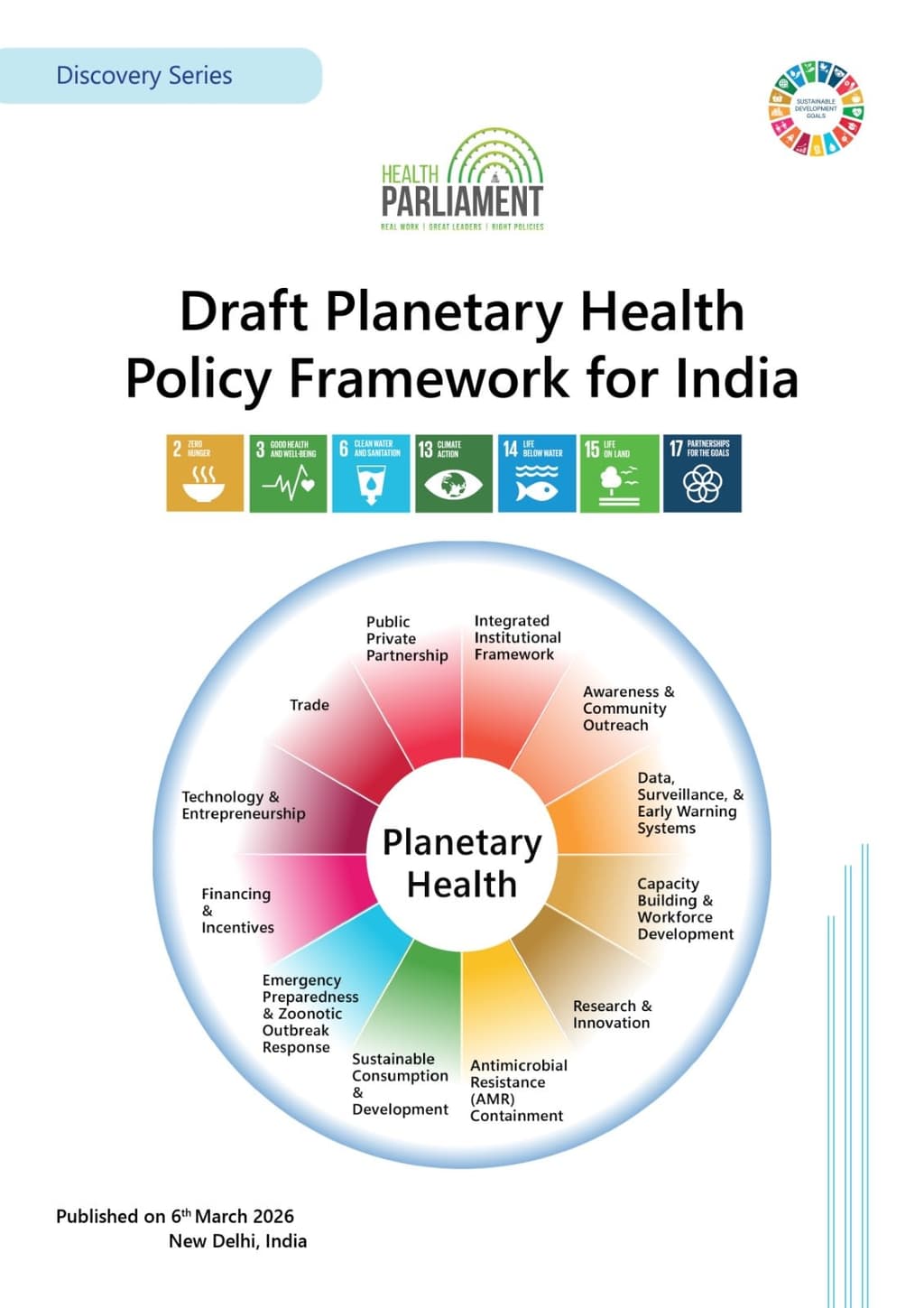
Draft Planetary Health Policy Framework for India
Draft Planetary Health Policy Framework for India is a strategic blueprint by Health Parliament to operationalize the One Health approach by integrating human, animal, and environmental health systems. Developed through extensive consultations, it addresses fragmented responses by proposing a unified, systems-driven framework for coordinated prevention, early detection, and rapid response. The report outlines a vision for 2047, supported by 12 policy pillars spanning surveillance, antimicrobial resistance, sustainability, and governance. Emphasizing a shift from reactive to prevention-led approaches, it focuses on aligning existing systems to build a resilient, integrated health ecosystem for India.
Background Note: Unseen Millions - A National Multistakeholder Study on Autism (ASD) and ADHD
The Background Note for Unseen Millions is developed through a comprehensive review of existing literature, policies, and global evidence to establish the foundational context for understanding Autism Spectrum Disorder (ASD) and Attention-Deficit/Hyperactivity Disorder (ADHD) in India. It synthesizes insights from research studies, national programmes, legislative frameworks, and international best practices to present a consolidated view of the neurodiversity landscape.
Anchored in the neurodiversity paradigm, the note outlines the evolving understanding of neurological differences as natural variations in human functioning, moving beyond purely clinical interpretations. The document brings together evidence on India’s mental health ecosystem, including the historical evolution of mental health services, policy milestones, institutional frameworks, and programme implementation.
Serving as a knowledge base, the Background Note supports the main report by providing a structured synthesis of existing evidence. It enables a clearer understanding of the current landscape and informs the need for more integrated, inclusive, and system-oriented approaches to neurodiversity in India.
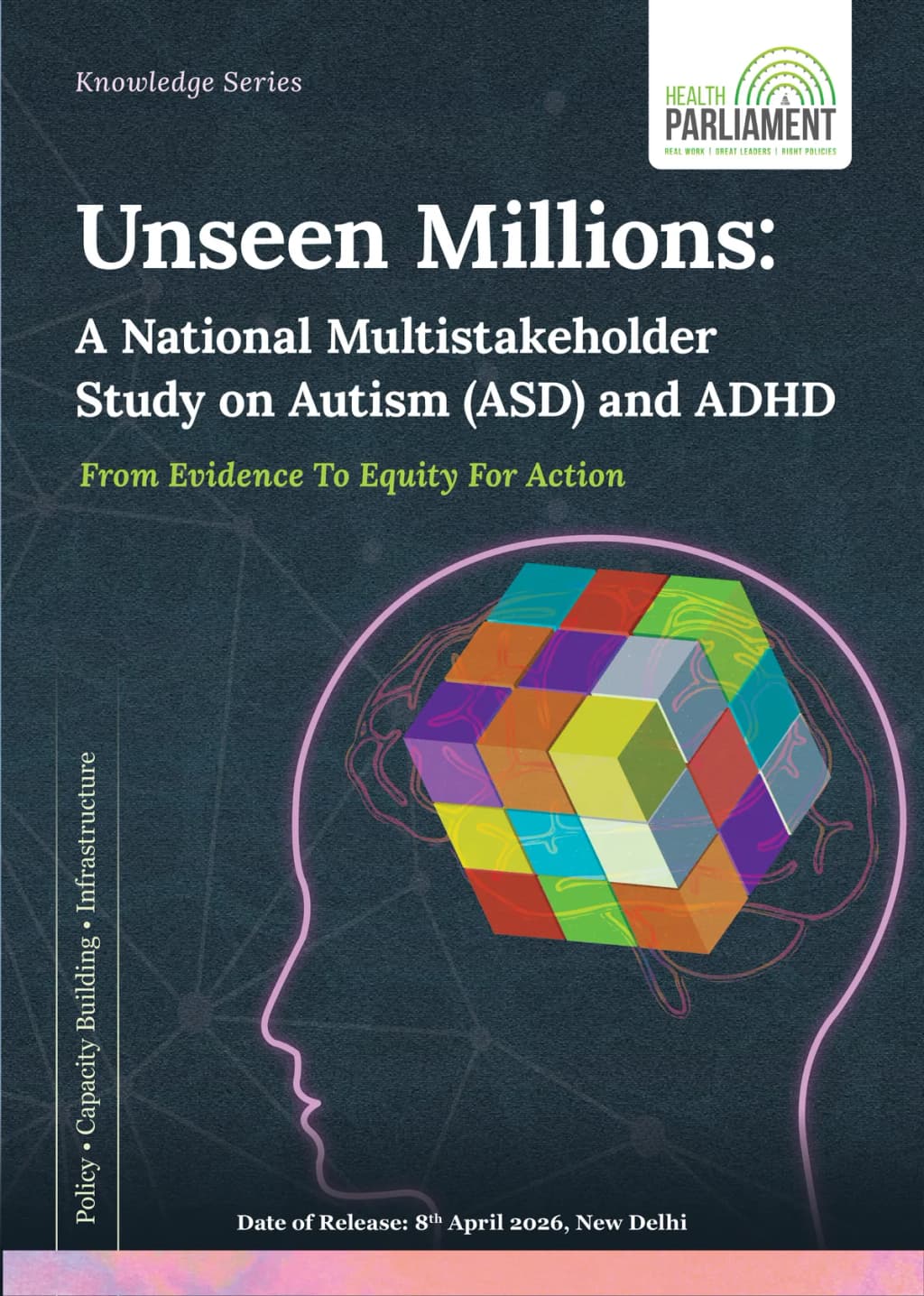
Unseen Millions: A National Multistakeholder Study on Autism (ASD) and ADHD
This is a national, multi-stakeholder study by Health Parliament that presents a comprehensive, ground-level understanding of Autism Spectrum Disorder (ASD) and Attention-Deficit/Hyperactivity Disorder (ADHD) in India. Built through a mixed-methods approach, the report integrates insights from more than 40 stakeholder consultations, field visits across multiple cities, and responses from over 235 parents and caregivers to capture both systemic realities and lived experiences.
Moving beyond awareness, the study examines neurodiversity through a systems lens, focusing on how policy frameworks, workforce capacity, and service infrastructure shape access to diagnosis, care, education, and long-term support. Anchored in three core pillars-Policy, Infrastructure, and Capacity Building-the study provides an integrated assessment of where intent exists, where implementation fails, and where systemic redesign is required.
More than a situational analysis, this report offers a grounded, evidence-informed roadmap for reform. It calls for coordinated, cross-sectoral action to build a responsive, inclusive, and lifecycle-based neurodiversity ecosystem, positioning ASD and ADHD not as peripheral concerns, but as central to India's human capital, social equity, and future development.
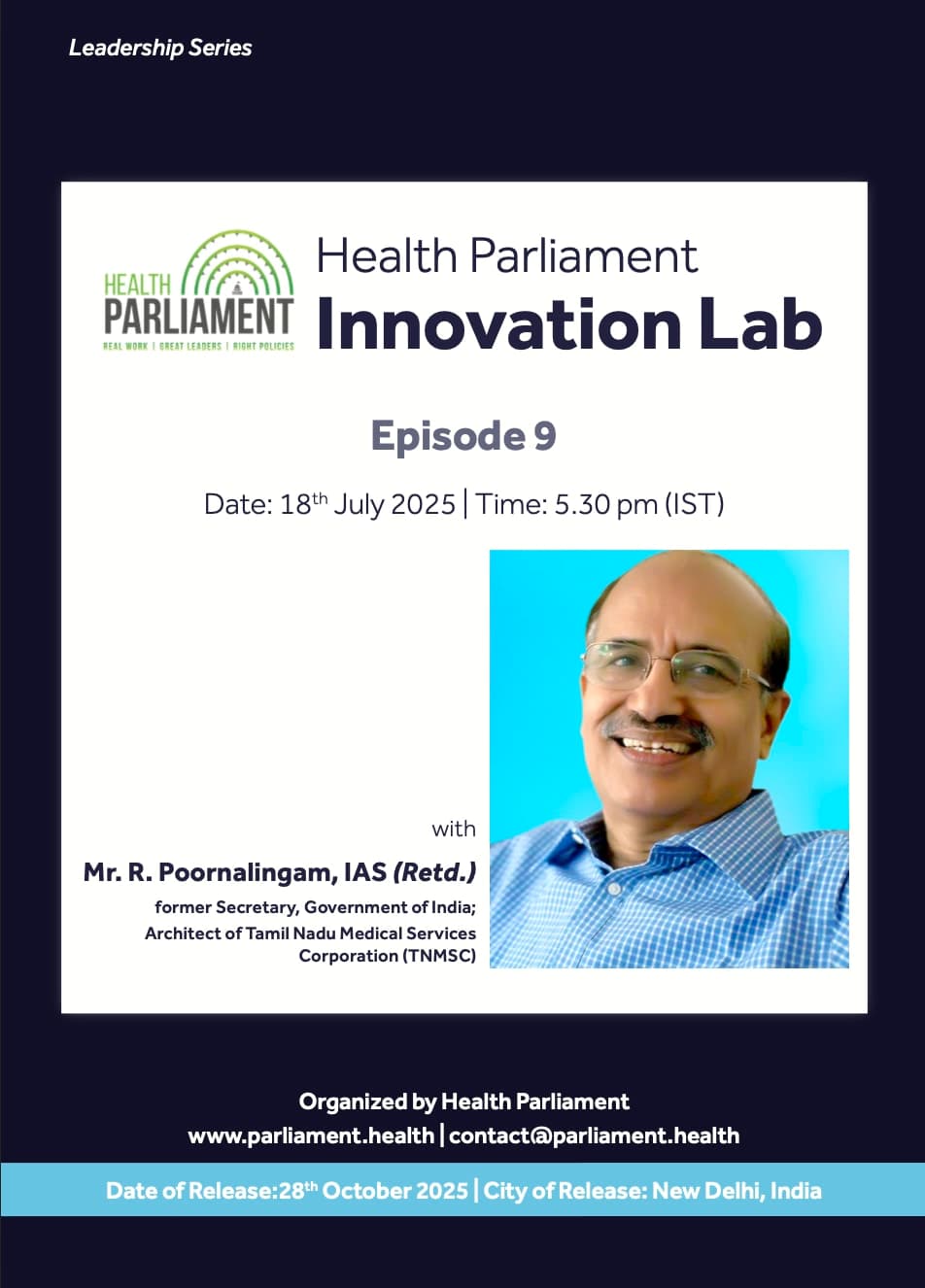
Key Takeaways from the Health Parliament Innovation Lab with Mr. R. Poornalingam, IAS (Retd.)
Mr. R. Poornalingam, IAS (Retd.), former Secretary, Government of India, and architect of the Tamil Nadu Medical Services Corporation (TNMSC), joined Health Parliament's Innovation Lab to share how he transformed public drug procurement and distribution in Tamil Nadu - a model that went on to earn international acclaim from the WHO and World Bank.
In this episode, Mr. Poornalingam recounts how he replaced a corruption-prone, decentralized drug supply system with a centralized, transparent, and consumption-driven model introducing manufacturer-only tenders, dual-laboratory quality testing, and a credit-based "passbook system" that brought real-time accountability to healthcare logistics across the state. His reforms significantly reduced infant mortality and expanded access to medicines for millions.
A masterclass in ethical, output-focused governance, this conversation offers a rare, ground-level account of how sincere effort, systems thinking, and personal conviction can transform public institutions even against entrenched resistance.
Key Takeaways from the Health Parliament Innovation Lab with Dr. Sivaranjani Santosh
Dr. Sivaranjani Santosh, paediatrician, first aid and CPR trainer, and social activist, shares the eight-year journey behind one of India's most significant medical labelling reforms. Trained at JIPMER, Pondicherry, Dr. Santosh identified a public health crisis hiding in plain sight: commercial liquid products were being sold as "ORS" despite containing 9–10 times the recommended sugar content, worsening dehydration in children with diarrhoea instead of treating it. What began as a clinical observation grew into a sustained advocacy campaign, moving from parent education to social media outreach to regulatory petitions and, ultimately, a Public Interest Litigation. In October 2025, FSSAI issued a landmark order banning the use of the term "ORS" for products that don't meet WHO formulation standards, a decision upheld against industry appeals.
This episode unpacks how bedside clinical observations can surface systemic failures, why disclaimers fail in low-literacy contexts, and what it takes to sustain a multi-year advocacy campaign against institutional and commercial resistance.